

Mountain dishes
Do you know caraway, the iconic seed of our charcuterie?
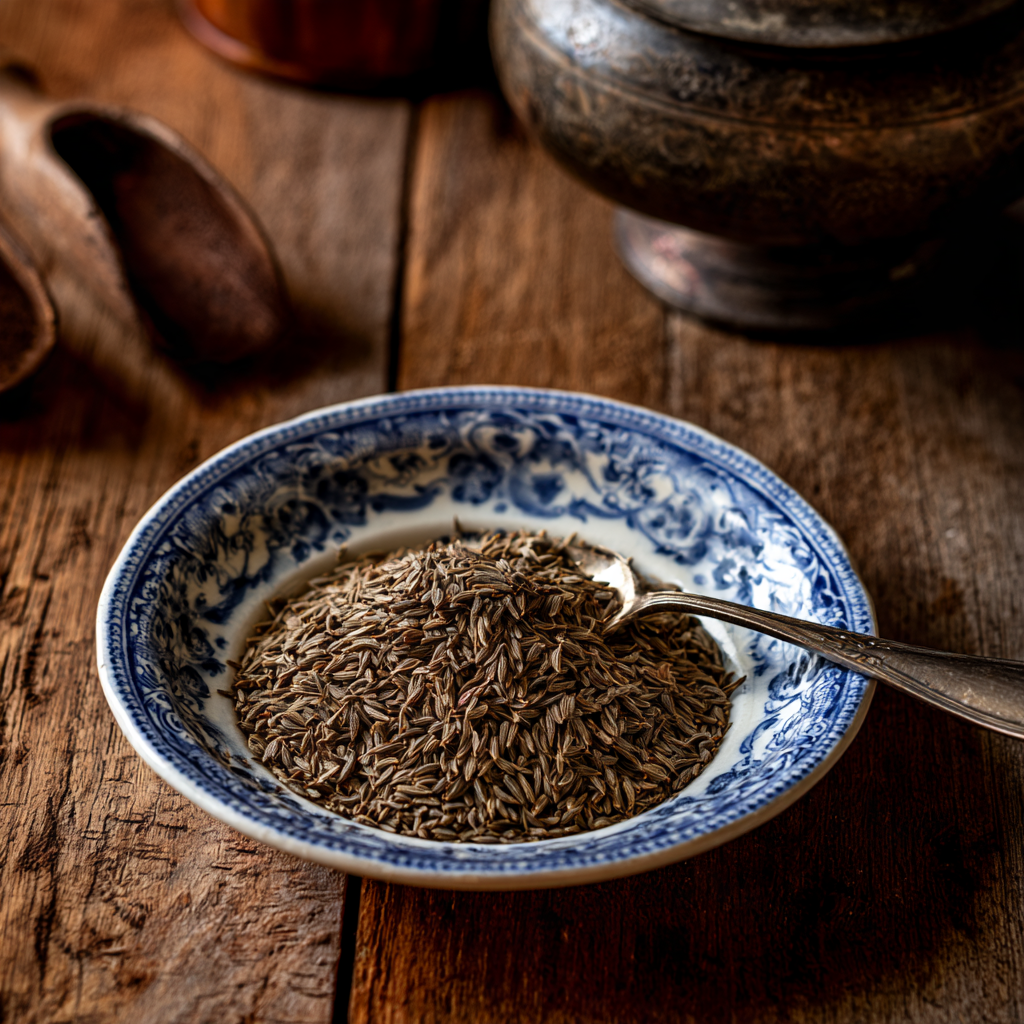
Nicknamed “mountain cumin”, caraway is an aromatic seed that grows wild in alpine mountain pastures and subtly flavours the traditional charcuterie of our valleys. Used sparingly to respect the quality of the meat, it mainly lifts certain smoked sausages, saucissons secs, and recipes made with cabbage. In addition to bringing a fresh, aniseed signature, this high-altitude plant naturally aids the digestion of the heartiest mountain dishes.
Key points
- Wild mountain pastures: caraway is gathered wild on mountain slopes, earning it the familiar name of mountain cumin.
- Digestion and flavour: its seeds, with their fresh and peppery notes, are traditionally mixed into preparations rich in cabbage and fatty meat to ease digestion.
- Alpine restraint: in Savoie and Haute-Savoie, seasonings remain measured to let the pork, the pure drying air, and the softwood smoke shine through.
- Charcuterie heritage: from diots (Savoyard sausages) to pormonier, via saucisse aux choux and smoked saucissons, cured meats celebrate this marriage of herbs and terroir.
Did you know?
Although commonly called “mountain cumin” or “meadow cumin”, caraway (Carum carvi) differs distinctly from oriental cumin both in its hardiness and in its aromatic profile, which is much fresher, milder, and slightly lemony.
In mountain households of the past, the summer gathering of caraway umbels in high-altitude meadows provided an essential store to flavour bread, rustic choucroute, and minced pork during the harsh winter months.
What is mountain-pasture caraway and where does it come from?
During your summer hikes across the grassy slopes of our massifs, you have almost certainly come across an elegant perennial plant of the Apiaceae family, without always recognising it. Caraway, which mountain elders affectionately call meadow cumin or mountain cumin, thrives wild in sunny high-altitude pastures. From early summer, its erect stems bear delicate umbels of white or pinkish flowers that give way, towards autumn, to small curved fruits with distinct ridges. It is precisely these tiny seeds that hold all the aromatic power of alpine flora.
Historically, this rustic seed was one of the first condiments accessible to the people of the high valleys. Unlike distant spices brought from Asia along trade routes and reserved for urban elites, caraway grew within arm's reach, along mule tracks and around mountain pasture chalets. Peasant families gathered generous handfuls, drying them on linen cloths beneath roofs of tavaillons (wooden shingles) or slate. Once thoroughly dry, these seeds were carefully kept in tin boxes or stoneware jars to flavour fresh cheeses, enrich bread doughs, and season the preparations from the traditional pig slaughter.
Caraway's flavour profile differs distinctly from that of its southern cousin, cumin. Where cumin develops a warm, earthy, and almost musky flavour, caraway displays a far more subtle register, marked by aniseed aromas, a hint of citrus, a minty undertone, and a gentle, peppery warmth. This sensory liveliness cleanly cuts through the fat of charcuterie without ever overwhelming the palate. It is this clever balance between botanical delicacy and peppery freshness that has made it a favoured ally of charcutiers and cooks across our regions.
Why pair this rustic seed with alpine charcuterie?
In the world of cured meats and traditional mountain cuisine, the use of aromatics is not just about culinary pleasure: it is the product of centuries of peasant common sense. Charcuterie meats crafted to endure the bitter cold of winter are naturally dense, nourishing, and rich in fat. Caraway has been renowned since time immemorial for its remarkable carminative and stomachic qualities. By stimulating gastric juice secretion and soothing intestinal fermentation, this small seed makes even the heartiest preparations easy to digest.
This pairing is especially striking in dishes combining pork and cabbage. The king vegetable of mountain vegetable patches thanks to its ability to withstand frost, cabbage has thick fibres that require long cooking and can sometimes feel heavy on sensitive stomachs. By adding a few pinches of crushed caraway into a saucisse aux choux or into a hearty potée stew simmering in a cast-iron pot, mountain cooks knew they were turning a rustic meal into a comforting, easily digestible feast.
The use of caraway in Savoyard charcuterie nevertheless retains an elegant restraint. Unlike Mediterranean charcuterie, heavily rubbed with chillies or dense herbs, alpine charcuterie favours subtlety. Caraway is never used to overpower the clean taste of pork, but rather to provide an aromatic lift, a fleeting nuance that supports the texture of the mince and enhances the flavours developed through drying or smoking.
What are the secrets of traditional Savoyard seasoning?
To understand the rightful place of caraway, one must look at the overall seasoning philosophy in Savoie and Haute-Savoie. Here, the cardinal rule is an intentional restraint. The charcutier never seeks to mask the meat, but rather to guide it to its fullest flavour. The elementary base of all mountain curing brings together sea salt—essential for preservation and juice extraction—crushed or ground black pepper, vigorously crushed fresh garlic, and a generous splash of dry Savoie white wine, mixed straight into the sausage mince to bind the meat and give it its legendary tenderness. Alcohol abuse is dangerous for your health, consume in moderation.
Around this timeless base revolve sweet, deeply warming spices, adopted for generations by local artisans. Freshly grated nutmeg and finely ground clove are among the most emblematic seasonings of our region. They impart a velvety, comforting aroma, instantly recognisable in fresh diots as well as in dried saucissons hanging from drying-room beams.
Foraged herbs and seeds complete this aromatic palette with great precision. Alongside mountain-pasture caraway, juniper berries provide their resinous, woody bitterness, while fennel seeds distinguish certain recipes influenced by the plains and the shores of Lake Geneva. Finally, wild herbs gathered in the Massif des Bauges or on the ridges of Tarentaise bring that scent of dried hay and open air that characterises the spirit of our mountains.
The taste identity of alpine charcuterie finds its culmination in the age-old art of the smokehouse. Rather than overloading the recipe with artificial seasonings, the artisan entrusts the cuts to the gentle smoke of local woods. In traditional tuyés (chimney smokehouses) or rustic smoking rooms, a flameless fire slowly smoulders with logs and sawdust of fir, spruce, beech, and dry juniper branches. This slow infusion wraps fat and meat in an amber veil with delicate notes of undergrowth and resin.
In which Savoyard charcuterie specialities can caraway be found?
Among the incredible diversity of cured meats and sausages that make the reputation of the two Savoyard departments, certain preparations give pride of place to caraway. The most striking example remains without doubt the traditional saucisse aux choux. This gem of charcuterie heritage is made of equal parts carefully selected pork and cabbage leaves blanched in boiling water. Everything is thoroughly mixed, then seasoned with sweet spices—foremost among them caraway and juniper berries—which elevate the plant sweetness of the vegetable before a delicate spell in the smokehouse.
Caraway also makes notable appearances in certain creations of dried saucissons and smoked mountain sausages. Artisan charcutiers sometimes slip a few whole seeds into the French pork mince. When chewed, the seed gives a delicate crunch, instantly releasing a burst of aniseed freshness that pairs wonderfully with the melt-in-the-mouth texture of the back fat and the aromatic concentration developed over weeks of curing in the dry mountain air.
Traces of caraway are also found in mountain variations of potées and pot-cooked meats. When simmering generous slices of rustic bacon or smoked sausages alongside winter vegetables, a tied muslin parcel holding caraway seeds, peppercorns, and juniper berries diffuses an enveloping fragrance throughout the broth without clouding its clarity.
What are the other must-try charcuterie specialities of our mountains?
For travellers seeking culinary discoveries, the charcuterie range of Savoie and Haute-Savoie holds many other centuries-old treasures. It is impossible to begin this journey without mentioning the famous diots (Savoyard sausages). These small pork sausages, minced finely or coarsely, are seasoned with garlic, nutmeg, and dry Savoyard white wine. Whether enjoyed plain, smoked over softwood, enriched with wild herbs, diced Beaufort, or cabbage, diots lend themselves wonderfully to slow braising on a bed of melted onions and local wine. Alcohol abuse is dangerous for your health, consume in moderation.
Another fascinating speciality, the pormonier (also called pormonaise depending on the valley, especially in the Vallée d'Aulps) perfectly illustrates the art of making the most of every farm resource. This rustic sausage combines pork, noble offal such as lungs—from which it draws its name—and an abundant proportion of very finely chopped green garden vegetables: Swiss chard, tender spinach, and leeks, all lifted by a handful of aromatic herbs.
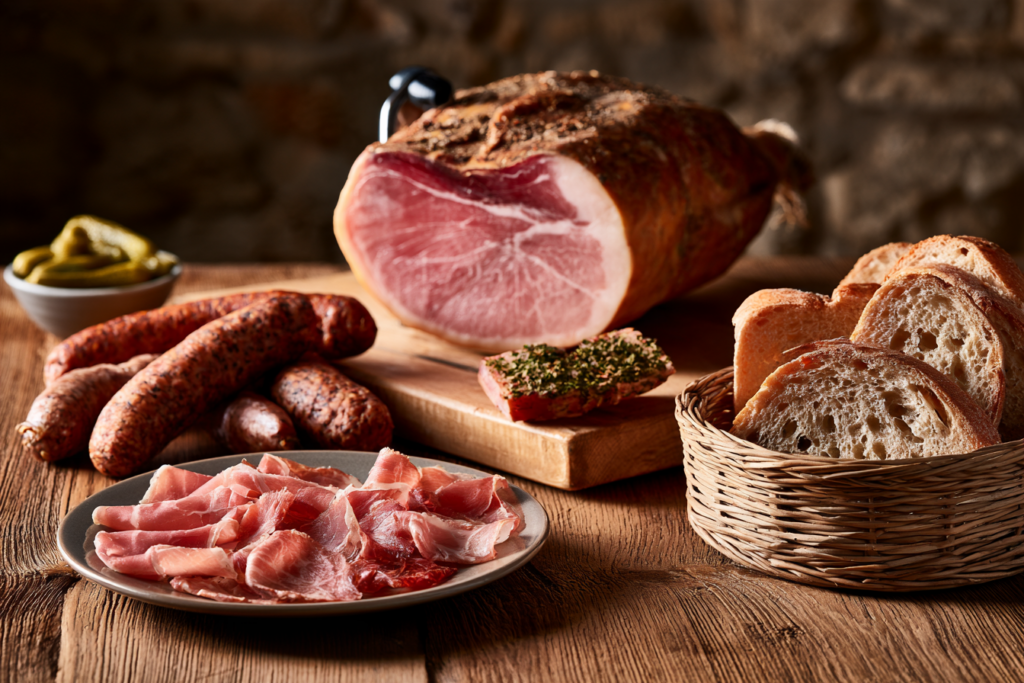
Savoie dry-cured ham (jambon cru de Savoie) embodies the aristocracy of our larders. Made from generous pork legs, it is carefully massaged and dry-salted, rubbed with a skilful blend of sweet spices, and often lightly smoked over softwood and juniper. This is followed by a long, peaceful rest of several months in drying rooms where the brisk mountain air works its magic, giving it firm, meltingly tender, and delicately fragrant flesh.
The selection would not be complete without mentioning the longeole, a coarse-ground pure pork sausage iconic of the Haute-Savoie border areas and the Geneva basin, made with rind and distinctive fennel seeds. We should also mention the famous smoked saucisson from Magland, the borfatte, dried saucissons studded with crunchy hazelnuts, walnuts, blueberry pieces, or infused with génépi, not forgetting rustic bacon and pork leaf fat—salted, peppered, garlicked, and slowly smoked—indispensable ingredients for traditional farcement or raclettes shared after a day on the slopes.
How to enjoy and elevate caraway in your holiday dishes?
Back from an invigorating day spent roaming the ridges or cruising down snowy slopes, nothing beats the pleasure of a table laid with authentic specialities. If you are preparing a meal featuring mountain sausages or a mountain potée, take inspiration from the centuries-old gestures of our elders by adding a pinch of ground or whole caraway to your cooking water or the bottom of your casserole dish. This seed brings a surprising lightness to the heartiest charcuterie dishes, while awakening the natural juices of slow-cooked meats.
On a tasting platter shared over drinks, cured saucissons and slices of smoked meats pair harmoniously with dense rye breads or sourdough loaves sprinkled with a few mountain cumin seeds. To accompany this convivial moment, a crisp, dry white wine from the vineyards of Savoie, such as a Roussette or a mineral Jacquère, offers sparkling freshness that perfectly matches the aniseed notes of caraway and cleanses the palate with elegance. Alcohol abuse is dangerous for your health, consume in moderation.
Finally, remember that caraway is also a wonderful match for our great local cheeses. A simple small dish of caraway placed on the table allows everyone to dip a bite of Tomme or a piece of aged cheese delicately into these rustic seeds, revealing unsuspected flavour pairings that prolong the generous, unspoilt spirit of our mountain pastures.
La charcutière
To set a generous table at home in pure mountain spirit, we have brought together in our “La charcutière” selection the best charcuterie expertise from our valleys. You will find the perfect balance of open-air cured saucissons, slices delicately smoked over softwood, and traditional cured meats that honour the nobility of our alpine terroirs.
Frequently asked questions
Are caraway and cumin the same plant?
No, although caraway is commonly called “mountain cumin”, it is a distinct alpine plant (Carum carvi) offering a fresher, more aniseed, and citrusy flavour than oriental cumin.
Why is caraway added to Savoyard saucisse aux choux?
Caraway brings a pleasant fresh aromatic note while greatly aiding the digestion of the thick cabbage fibres and rich pork meat.
Which wood species are used to smoke charcuterie in Savoie?
Traditional smoking relies on the slow combustion of local woods, mainly fir, spruce, beech, and juniper branches, which provide a balanced woody note.
What characterises the Savoyard pormonier?
This typical sausage combines pork, noble offal, and a generous amount of chopped green vegetables such as Swiss chard, spinach, and leeks, all seasoned with aromatic herbs.
Written with the help of an AI tool, reviewed and approved by the Les Tarines team.
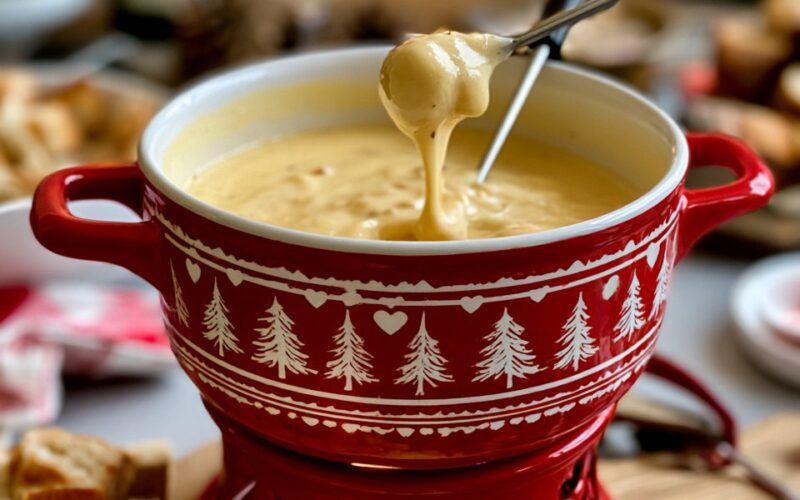
Is fondue Savoyard or Swiss? What a 1477 text says
Savoyard or Swiss fondue? A 1477 text already describes Tarentaise cheese melted over the fire. History, the verdict and ways to complement…
Read the article