

Mountain dishes
Is fondue Savoyard or Swiss? What a 1477 text says
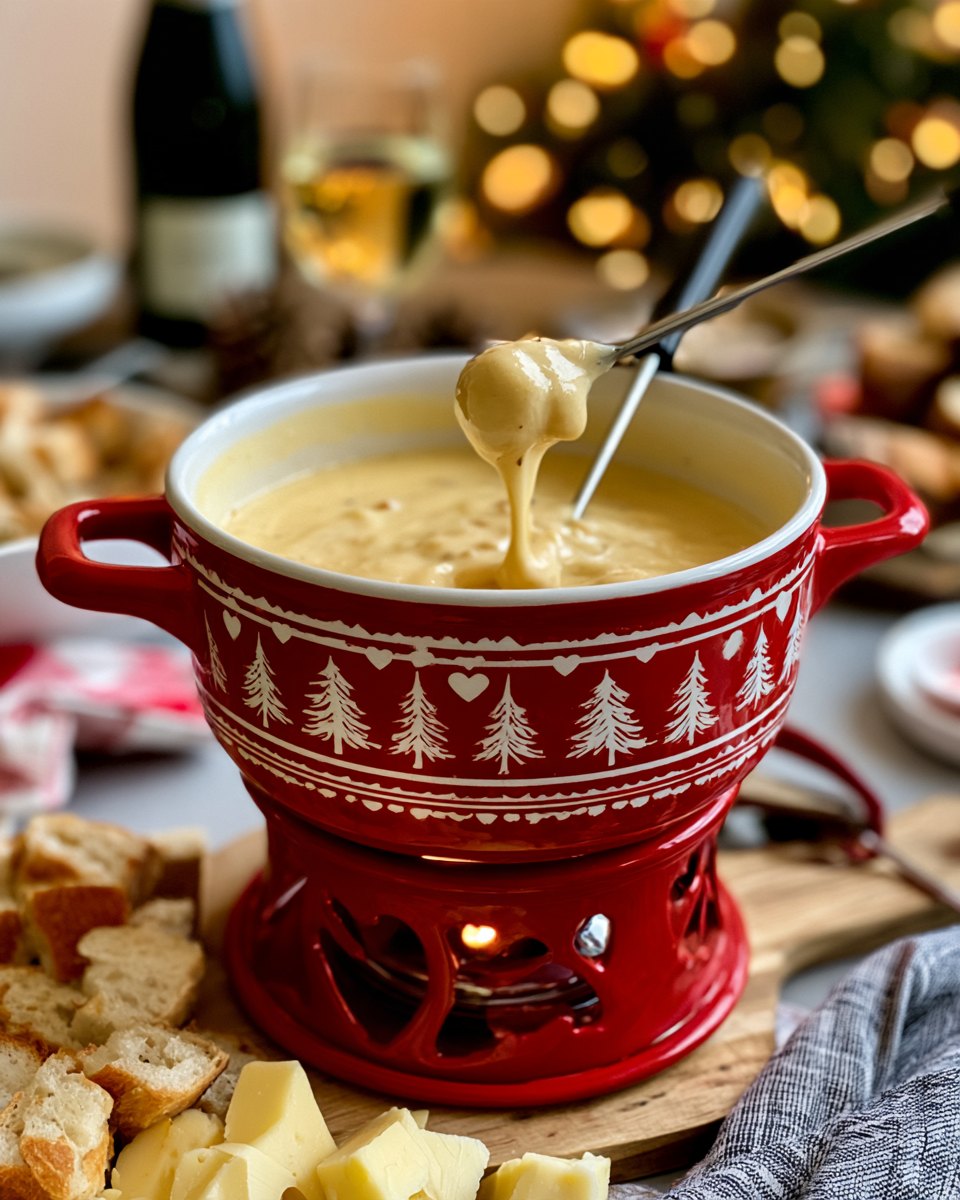
Who invented fondue, Savoie or Switzerland? The oldest known text describing cheese melted over the fire and eaten with toasted bread comes from Savoie: it dates back to 1477 and talks about cheeses from Maurienne and Tarentaise. The oldest recipe for cheese cooked in wine, however, was written in Zurich in 1699. Fondue is therefore first and foremost Alpine heritage, shared on both sides of Lake Geneva.
Key takeaways
- 1477: the physician to the Duke of Savoie describes cheeses from Maurienne and Tarentaise melted over the fire in winter, with lightly toasted bread.
- 1699: a Zurich cookbook gives the first known recipe for cheese melted in wine, into which bread is dipped.
- 1930s: the Swiss Cheese Union turns fondue into a national dish; in Savoie, it remains a local dish, made with Beaufort and mountain-pasture cheeses.
Did you know?
In 1477, Pantaleone da Confienza, physician to the Dukes of Savoie, had the Summa lacticiniorum printed in Turin, the first European book entirely devoted to milk and cheeses. In it, he describes the cheeses he tasted while crossing the Mont-Cenis pass.
In Maurienne, he recounts, cheeses are made as long as a forearm, as thick as an arm, held by a small stick in their centre. They are called lumbi. They are so fatty that they “melt remarkably well in the heat of the fire”, and “in winter, they are melted with lightly toasted bread and make a very pleasant meal”. He adds that those from Tarentaise are, by common consent, even better.
He also mentions the vasarini from Tarentaise, perhaps ancestors of our vacherins: round, thin, very fatty, the colour of lemon-yellow wax, they melt over the fire even after a year in the cellar. He compares them to those made near the Abbey of Abondance. Five centuries before advertising campaigns, a Savoyard physician was already noting that our cheeses melted by the fireside were a real treat.
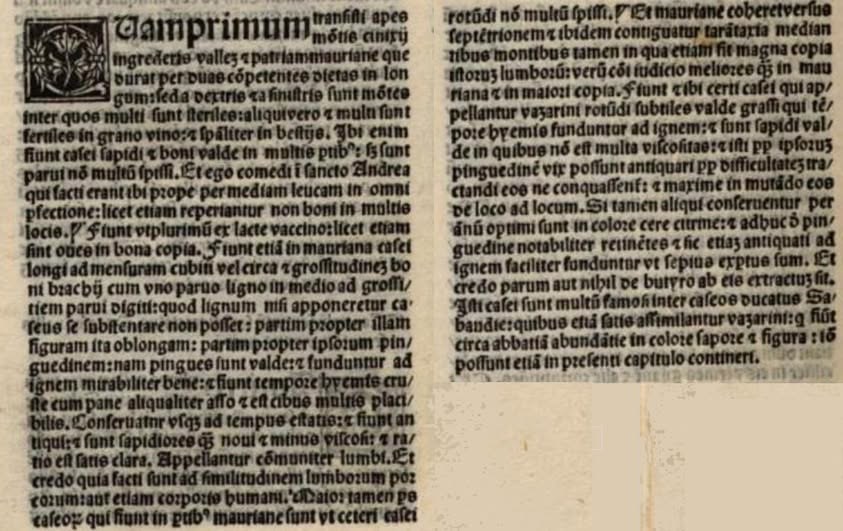
Translation by Jean-Pierre Derrier, member of the Société d’histoire et d’archéologie de Maurienne (SHAM).
What the 1477 text proves, and what it does not prove
Pantaleone’s text is valuable because it is precise: it names valleys (Maurienne, Tarentaise), a village (Saint-André), cheeses (lumbi, vasarini), a season (winter) and a way of eating them (melted over the fire, with toasted bread). It is the oldest known description of a meal of melted cheese in our mountains.
Yet it does not yet describe the fondue we know today. There is neither a caquelon (fondue pot), nor wine, nor a burner in the middle of the table. The cheese is exposed to the heat of the fire, then placed onto bread: the gesture is closer to raclette or croûte au fromage (melted cheese on bread). What 1477 establishes is what matters most: in Savoie, melting cheese to get through the winter has been a written tradition for more than five centuries.
The first recipe with wine comes from Zurich
The recipe that truly resembles our fondue appears two centuries later, in 1699, in Anna Margaretha Gessner’s manuscript cookbook in Zurich. It is entitled Käss mit Wein zu kochen, “to cook cheese with wine”.
In it, half a glass of wine is poured into a dish placed over embers, mature fatty cheese is added, grated or sliced very thinly, and left to melt until the wine can no longer be tasted. Bread is then dipped into it, keeping a few embers underneath so the cheese does not harden. Everything is there: the wine, the communal dish, the bread dipped in, and the fire kept alight.
One detail amuses historians: until the late 19th century, the word “fondue” mainly referred to a dish of scrambled eggs with cheese found in French cookbooks. Wine fondue lived without its current name for a long time.
How fondue became Swiss
If fondue is seen today as the quintessential Swiss dish, it is largely thanks to marketing. Until around 1930, it was hardly known outside French-speaking Switzerland. The Swiss Cheese Union, seeking to boost consumption during the crisis, made it a national dish, even in army canteens. After the war, its campaigns established fondue as a Swiss symbol, both in Switzerland and abroad.
In Savoie and the Val d’Aoste, nobody needed an advertising campaign: fondue remained a family and village dish, made with cheeses from the valley. Savoyard fondue is recognised by its blend of mountain-pasture cheeses (Beaufort, Abondance, Comté or Emmental de Savoie) and the white Savoie wine that thins it.
So, Savoyard or Swiss?
Our verdict can be summed up in two sentences. The custom of melting mountain cheese over the fire and eating it with toasted bread is attested in Savoie as early as 1477, in Maurienne and Tarentaise. The written recipe with wine appears in Zurich in 1699, and fondue’s worldwide fame owes a great deal to 20th-century Switzerland.
Fondue does not have a single inventor, therefore, but a cradle: the Alps, where people have always known that fatty cheese, good bread and a fire are enough to make a winter evening. The Savoyards simply have the advantage of the older text.
How to complement a fondue?
Bread remains fondue’s historic companion, just as in Pantaleone’s day. Choose day-old bread, cut into cubes that each keep a piece of crust: it holds better on the fork and does not get lost in the caquelon (fondue pot).
Some people add mushrooms to the fondue. Cèpes (porcini), morels or simple button mushrooms bring an earthy woodland note that pairs wonderfully with mountain-pasture cheese; cèpe fondue has indeed become a classic variation in Savoie.
In Switzerland, it is gladly eaten with small steamed potatoes, alongside the bread. Beside the caquelon (fondue pot), a charcuterie platter of mountain meats (cured ham, dried meat, saucisson) does the rest. And when the cheese is nearly finished, the thin golden crust left at the bottom, called la religieuse, is shared like a treat.
In the glass, stick with a dry, crisp Savoie white wine: a Jacquère, a Roussette de Savoie or a Chignin-Bergeron. Their freshness balances the richness of the cheese. Alcohol abuse is dangerous for your health; consume in moderation.
Savoyard fondue, in Montchavin
In Montchavin, at the heart of this Tarentaise that Pantaleone already found so rich in cheeses, we prepare Savoyard fondue by hand: Savoie cheeses grated by us, Savoie wine, and a hint of garlic and nutmeg. We offer it plain, or with cèpes for those who love woodland flavours, and everyone can complement it with a charcuterie platter. All that is left is to heat up the caquelon (fondue pot), just as people have done here for more than five centuries.
Frequently asked questions
Who invented fondue?
No one in particular. The oldest text describing cheese melted over the fire with toasted bread comes from Savoie (1477); the oldest recipe for cheese cooked with wine comes from Zurich (1699).
What is the difference between Savoyard fondue and Swiss fondue?
The cheeses. Savoyard fondue combines Savoie cheeses such as Beaufort, Abondance or Comté; Swiss “moitié-moitié” combines Gruyère and Vacherin Fribourgeois.
What should you serve with fondue?
Day-old bread cut into cubes with its crust; in Switzerland, often small steamed potatoes. On the side, a mountain charcuterie platter and a Savoie white wine.
Can you add mushrooms to fondue?
Yes. Cèpes, morels or button mushrooms pair well with cheese; cèpe fondue is a classic variation in Savoie.
Sources
- Pantaleone da Confienza, Summa lacticiniorum, Turin, 1477; translation of the passage by Jean-Pierre Derrier (SHAM).
- Culture Cheese Magazine, « Medieval Cheese: Meet Pantaleone da Confienza »
- Zentralbibliothek Zürich, transcription of « Käß mit Wein zu kochen » (Koch-Buch by A. M. Gessner, 1699)
- Musée national suisse, « The story of fondue in Switzerland »
- Swissinfo, « La fondue, un plat national… fruit du marketing »
Do you know caraway, the iconic seed of our charcuterie?
A wild plant of our mountain pastures, caraway enhances alpine charcuterie. Discover its history, its digestive qualities, and Savoyard cured meats.
Read the article